


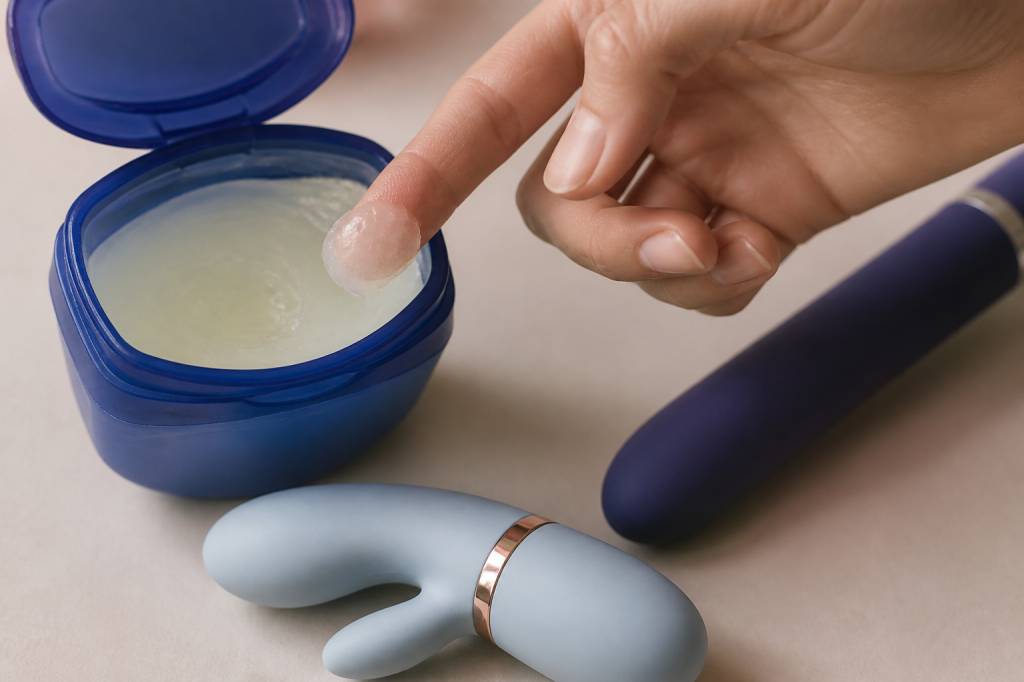
Petroleum jelly has a reputation for being the kitchen-cabinet hero that somehow ends up everywhere: dry lips, rough elbows, stubborn makeup, and yes, sometimes the bedroom. It’s cheap, widely available, and has a glide that can feel surprisingly luxurious. So it’s no wonder people ask the big question: can you use petroleum jelly as lube?
The short answer is: sometimes, but it’s not the safest or smartest choice for most sexual situations. When intimacy, condoms, and sex toys are involved, what feels “smooth enough” can still cause real problems later. Let’s break down what petroleum jelly actually does, where it can go wrong, and which alternatives make more sense if you want pleasure without the side effects.
What petroleum jelly actually is
Petroleum jelly is a semi-solid mixture derived from petroleum. In practical terms, it acts like an occlusive barrier: it sits on top of the skin and traps moisture in. That’s why it’s so effective for soothing dry, chapped skin.
As a lubricant, that same slippery barrier can reduce friction, which sounds ideal on paper. But sexual lubrication is a little more complicated than “if it’s slippery, it works.” A good lube should be body-safe for delicate tissues, compatible with condoms and toys, easy to clean, and ideally not encourage irritation or infection.
Petroleum jelly checks a few of those boxes, but not enough of them for many people.
Is petroleum jelly safe as lubricant?
For external use on intact skin, petroleum jelly is generally considered safe. But genital tissue is not the same as the skin on your elbow. The vulva, vagina, penis, anus, and surrounding areas are more delicate and more prone to microtears, irritation, and shifts in pH.
That matters because a lubricant should do more than feel slick. It should support the body’s natural balance. Petroleum jelly can be problematic for a few reasons:
- It can be difficult to wash off completely.
- It may trap bacteria and other irritants against the skin.
- It can interfere with condoms, especially latex and some polyisoprene products.
- It is not water-soluble, which makes cleanup messy and sometimes incomplete.
- It may not be ideal for people prone to vaginal infections or recurrent irritation.
So while petroleum jelly is not instantly dangerous in every case, it’s not what most sexual health experts would put at the top of the lube list. Think of it as the “wrong shoe for the hike” situation: you might get away with it for a while, but you’ll probably regret it once the terrain gets real.
The condom problem: why this matters more than people think
This is the biggest red flag. Petroleum jelly can weaken latex condoms and increase the risk of breakage. That’s not a minor technicality; it can mean a much higher chance of pregnancy or sexually transmitted infections.
Even if you’re using condoms “just for backup,” lube compatibility still matters. A condom that tears under friction is not a helpful condom. And because petroleum jelly is oil-based, it doesn’t mix well with latex materials.
If you’re using condoms, the safer rule is simple: avoid petroleum jelly and other oil-based products. That includes things like baby oil, coconut oil, body lotions, and many household moisturizers.
Some people assume, “It’s only a little bit, so what’s the harm?” But condoms are engineered for precision. Add the wrong ingredient, and you’re basically asking for the plastic version of a bad plot twist.
What about sex toys?
Sex toys bring another layer of caution. Petroleum jelly can be especially annoying with silicone toys because it can cling to surfaces, making cleanup harder and potentially contributing to material degradation over time.
For porous materials, oil-based lubricants can be even more problematic because they may get trapped in tiny surface textures. That can make thorough cleaning difficult, which is not what you want when a toy is meant to bring pleasure, not mystery bacteria.
A good guideline:
- For silicone toys, choose a water-based lube unless the manufacturer specifically says otherwise.
- For condoms, avoid petroleum jelly entirely.
- For textured or porous toys, prioritize lubes that rinse away easily and won’t linger in crevices.
If you’ve ever spent longer cleaning your toy than using it, you already know why this matters.
Can petroleum jelly cause infections or irritation?
It can, especially for people who are already prone to irritation. Petroleum jelly itself is not “dirty,” but its thick, occlusive nature can create conditions that are less friendly to vaginal and anal health.
Here’s why people sometimes run into trouble:
- It can trap moisture and bacteria. That may increase discomfort or contribute to imbalance in sensitive areas.
- It’s hard to fully remove. Residue can linger, especially in folds or around the anus and vulva.
- It may disrupt the vaginal environment. Some people notice more irritation or a higher tendency toward infections after using it.
That doesn’t mean every person will react badly. Bodies are wonderfully inconsistent, which is both fascinating and mildly annoying. But if you’ve ever experienced recurrent yeast infections, bacterial vaginosis, or unexplained genital irritation, petroleum jelly is not the first thing you want to experiment with.
And if you’re noticing burning, itching, unusual discharge, or pain after using it, stop using it and consider speaking with a healthcare professional.
When might someone still use it?
There are situations where petroleum jelly may seem appealing, especially if you’re in a pinch. It’s cheap, easy to find, and often feels richer than some thin lubes. Some people also like it for non-condom external masturbation because it stays put for a long time.
Still, “possible” is not the same as “recommended.” If you do choose to use it, the safest approach is to keep it away from condoms, avoid using it inside the vagina, and be meticulous about hygiene. But even then, there are better options available now.
If your body is sensitive, if you’re using toys, if there’s any condom use involved, or if you simply want something that’s easier to clean, petroleum jelly is usually not worth the trade-offs.
Better alternatives for different needs
The good news: there are plenty of excellent lubricants that make intimacy smoother without the baggage.
Water-based lube
This is the safest all-rounder for most people. Water-based lubricants are compatible with condoms and most sex toys, easy to wash off, and usually gentle on sensitive skin.
They’re a great choice if you want something versatile for partnered sex, solo play, or toy use. The downside is that some water-based lubes dry out faster than oil-based ones, so you may need to reapply. That’s a small price for flexibility and compatibility.
Look for formulas that are fragrance-free and designed for intimate use, especially if you’re sensitive.
Silicone-based lube
Silicone-based lubes are silky, long-lasting, and ideal for reducing friction during longer sessions. They’re also condom-safe, which is a big plus.
They tend to stay slippery much longer than water-based options, which makes them popular for penetrative sex and anal play. The trade-off? They can be trickier to clean and aren’t always recommended with silicone sex toys, depending on the toy’s material and the lube formula. Always check the manufacturer’s guidance.
If you want durability and don’t mind a little extra cleanup, silicone-based lube can be a game-changer.
Hybrid lubes
Hybrid lubricants combine water and silicone ingredients. They often offer a balance of easy cleanup and longer-lasting glide.
For people who want something less drying than water-based lube but less messy than pure silicone, hybrids can be a smart middle ground. Again, check compatibility if you’re using toys.
Natural oils: worth the hype?
Some people turn to oils like coconut oil because they feel natural and nourishing. They can be very slick and pleasant, but they come with the same major caution as petroleum jelly: they are not safe with latex condoms.
There’s also the issue of irritation and cleanup. “Natural” does not automatically mean “better for genitals.” Poison ivy is natural too, and nobody’s putting that in a bedside drawer.
If you’re condom-free and using them externally, some oils may be tolerated by some people, but they’re still not universally ideal. Sensitive skin can react in unexpected ways.
How to choose the right lube for your body
The best lubricant is the one that fits your body, your tools, and your type of play. A one-size-fits-all answer usually means someone is selling something.
Ask yourself:
- Am I using condoms?
- Am I using silicone or other sex toys?
- Do I have sensitive skin or frequent irritation?
- Do I want something long-lasting or easy to wash off?
- Am I using it for vaginal, anal, or external stimulation?
If condoms are part of the equation, prioritize water-based or silicone-based lube. If toys are involved, check material compatibility. If you’re prone to irritation, stay away from heavily scented formulas, warming lubes, and anything that leaves you feeling “tingly” in a bad way.
When in doubt, patch-test a small amount on your inner arm or outer skin before using it intimately. Your body will usually give you a quick yes, no, or absolutely not.
Why friction management is a pleasure issue, not just a safety issue
It’s easy to think of lubricant as a side accessory, but it’s really part of the experience. The right lube can reduce discomfort, improve sensation, and make it easier to stay in the moment. The wrong one can turn a hot encounter into a lesson in why “close enough” is not a strategy.
People sometimes avoid lube because they think needing it means something is wrong. Not at all. Lube is not a sign of failure; it’s a sign that you’re paying attention to your body and your pleasure. Whether you’re dealing with dryness, longer sessions, anal play, toy use, or simply wanting a smoother glide, lube is one of the easiest upgrades in sexual wellness.
That’s also why choosing a better lubricant than petroleum jelly matters. You’re not just avoiding risk; you’re optimizing comfort.
The bottom line for safer, better sex
Petroleum jelly can feel convenient, but convenience is not the same as compatibility. If condoms are involved, skip it. If sex toys are involved, there are usually better options. If you’re prone to irritation or infections, it’s especially wise to avoid it.
For most people, water-based lube is the safest everyday choice, silicone-based lube is excellent for long-lasting glide, and hybrid formulas can offer a useful middle ground. The best option is the one that keeps pleasure high and problems low.
In sex, the goal is not just “less friction.” It’s good friction, the kind you choose, control, and enjoy. Petroleum jelly might be slick, but the better alternatives are usually smoother for your body, your condoms, and your peace of mind.