 par
par Petroleum jelly is one of those household staples that seems to have a million uses. Dry lips? Check. Cracked heels? Sure. Minor skin irritation? Sometimes. So it’s no surprise that some people also wonder whether it can double as lube. After all, it’s thick, slippery, easy to find in the bathroom cabinet, and cheap. Sounds convenient, right?
But when it comes to intimate use, convenience is only part of the story. The real question is: is petroleum jelly safe as a lubricant for sex, and if not, what should you use instead?
What petroleum jelly actually is
Petroleum jelly is a semi-solid mixture derived from petroleum. In practical terms, it creates a barrier on the skin that helps lock in moisture. That’s why it’s common in lip balms, healing ointments, and skincare products.
As a lubricant, its texture is appealing at first glance. It stays in place longer than many water-based lubes, and it can feel extra slick. But what works for dry elbows does not automatically work for genitals, condoms, or sex toys. Sexual health has its own rules, and petroleum jelly comes with a few important caveats.
Can you use petroleum jelly as lube?
The short answer is: it’s not recommended for most intimate situations.
Technically, petroleum jelly can reduce friction, which is the basic job of lube. But a good lubricant needs to do more than just feel slippery. It should be body-safe, compatible with condoms and toys, easy to clean, and unlikely to trap bacteria or cause irritation. Petroleum jelly falls short on several of those points.
If you’ve ever thought, “It’s fine, it’s only once,” that’s understandable. Many people improvise in the moment. But when it comes to sexual wellness, using the right product matters more than we like to admit.
The main risks of using petroleum jelly during sex
Petroleum jelly is not inherently “toxic” on the skin, but intimate use introduces a different set of risks. Here are the big ones.
- It can increase the risk of infections by trapping bacteria and creating a barrier that’s harder to wash away completely.
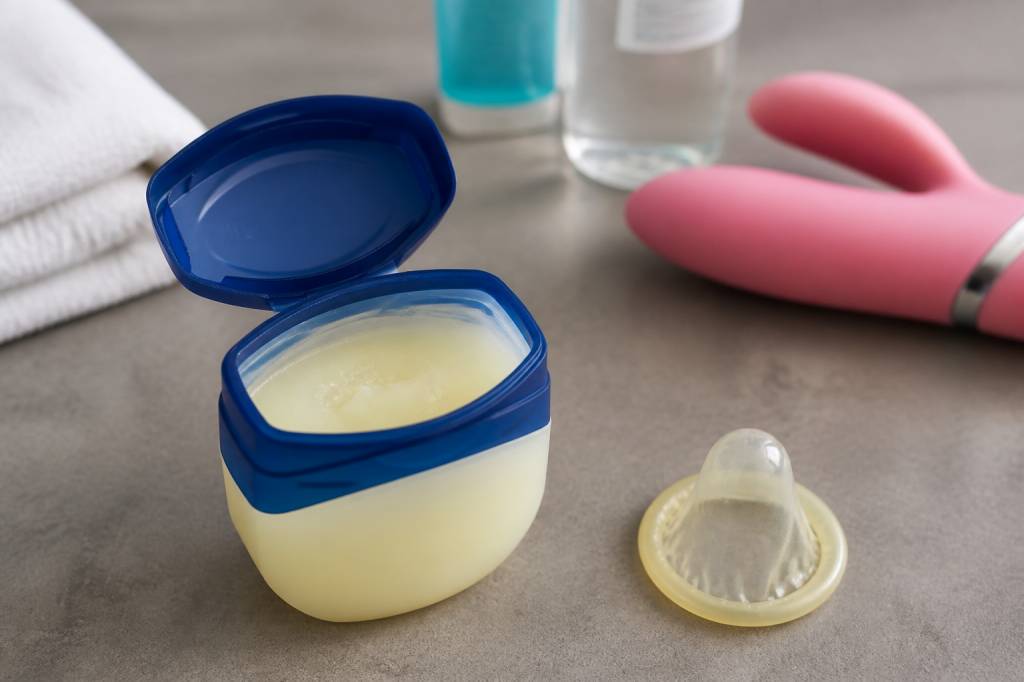
- It is not safe to use with latex condoms because it can weaken latex and raise the chance of breakage.
- It can be difficult to clean from the vagina or rectal area, which may contribute to irritation or imbalances.
- It may clog pores or irritate sensitive vulvar or anal tissue, especially if used frequently.
- It is not designed for internal use, and some people may experience discomfort or an allergic-type reaction.
That last point is worth underlining. Many people think, “If it’s safe for skin, it must be safe everywhere.” Not exactly. The vulva, vagina, anus, and penis all have delicate tissues that react differently to products than elbows or knees do.
Why petroleum jelly and condoms do not mix
If you use condoms, this is the most important warning: petroleum jelly and latex condoms are a bad combination.
Oil-based substances can weaken latex, which means the condom may lose elasticity and become more likely to tear. And when a condom breaks, the consequences can include unwanted pregnancy and sexually transmitted infections. Not exactly the kind of surprise anyone is looking for.
If you’re using non-latex condoms, compatibility depends on the material. Some non-latex condoms may tolerate oil-based products better, but that does not automatically make petroleum jelly a great choice. It still has hygiene and irritation drawbacks.
Rule of thumb: if you’re using condoms and want to keep things safer and simpler, choose a lubricant specifically labeled as condom-safe.
What about sex toys?
Petroleum jelly is also not the best partner for many sex toys. Why? Because it can be difficult to remove completely, especially from porous materials like jelly rubber, TPE, or certain soft plastics. Residue can sit on the surface and create a breeding ground for bacteria.
That matters even more if you share toys or switch between anal and vaginal use. The goal is smooth pleasure, not a stealth cleaning project after every session.
For most toys, water-based lubricant is the safest all-around option. Silicone lube can also work well, but always check the toy manufacturer’s guidance first, especially if the toy itself is made of silicone.
Can petroleum jelly cause infections?
It can increase the risk of infections in some situations, especially when used internally.
One reason is that petroleum jelly can alter the natural environment of the vagina and make it easier for bacteria or yeast to become problematic. It may also be harder to fully remove after sex, which can leave residue behind.
That does not mean everyone who uses it once will get an infection. Bodies are not robots, and reactions vary. But if you’re prone to bacterial vaginosis, yeast infections, UTIs, or irritation, petroleum jelly is generally not your friend here.
People with sensitive skin or recurrent infections are usually better off sticking with products made specifically for sexual use.
Is it safe for anal sex?
Anal tissue is delicate and does not self-lubricate, so lubrication is non-negotiable. That said, petroleum jelly is still not the best choice.
Yes, it can feel slick and long-lasting, which is why some people reach for it. But anal sex can involve microtears, and trapped residue can make cleanup more difficult. If you’re using condoms, the latex issue still applies. And because the anal area already has a higher risk of bacterial transfer, anything that’s hard to wash away is less than ideal.
If your goal is comfortable, safer anal play, choose a lubricant designed for that purpose. A thicker water-based or silicone-based lube will usually do the job better and with fewer drawbacks.
What about masturbation?
Some people use petroleum jelly for masturbation and never notice a problem. Others may experience irritation, breakouts, or a sticky aftermath they would rather not relive.
If you’re using it externally and not with condoms or toys, the risks are lower than with internal use. Still, it’s not the most body-friendly option. It can stain fabrics, be hard to wash off, and linger on skin in a way that feels more greasy than sexy.
If masturbation is your thing, a dedicated lubricant usually improves the experience. More glide, less cleanup, fewer “why does my sheet feel like a crime scene?” moments.
Better alternatives to petroleum jelly
The good news is that there are many alternatives that do the same job better. Which one is best depends on what you’re doing, what you’re using, and whether you have sensitive skin.
Water-based lubricants
Water-based lubes are the most versatile option for many people. They’re usually safe with condoms, compatible with most sex toys, easy to clean, and available in a wide range of formulas.
They do tend to dry out faster than silicone lubes, but that’s easy enough to solve with a bit more product or a splash of water. For beginners, couples, and toy users, water-based lube is often the safest place to start.
Silicone-based lubricants
Silicone lubes are silky, long-lasting, and excellent for situations where you want reduced friction for longer periods. They’re usually condom-safe, including with latex condoms, and they work especially well for anal sex.
The main caution: not all silicone lubes are compatible with silicone toys. Some can damage the toy surface over time. If you love silicone toys, check the label before pairing them.
Hybrid lubricants
Hybrid lubes combine water and silicone elements, aiming to offer the easy cleanup of water-based formulas with some of the staying power of silicone. They can be a nice middle ground, though quality varies a lot between brands.
If you’re trying a hybrid lube, read the ingredient list and packaging carefully. “Hybrid” sounds simple, but formulations can differ widely.
Natural or organic lubricants
Some people prefer lubes with plant-based or more minimal ingredient lists. That can be a great option, especially if you have sensitive skin or prefer a more eco-conscious product lineup.
Just remember that “natural” does not automatically mean safer. Coconut oil, for example, is popular but still oil-based and not latex-condom-safe. Always check how a product behaves with condoms and toys before using it in the bedroom.
How to choose the right lube for your body
There is no single perfect lubricant for everyone. Your body, your preferences, and your gear all matter.
Here’s a practical way to choose:
- If you use latex condoms, choose a water-based or silicone-based lube.
- If you use silicone toys, water-based lube is usually the safest bet.
- If you want something long-lasting for anal play, try a quality silicone lube or a thicker water-based formula.
- If you have sensitive skin, look for fragrance-free, glycerin-free, and pH-balanced formulas when possible.
- If cleanup matters to you, water-based lubes are generally easiest to wash off.
A useful habit: keep a small bottle of lube near where you actually have sex, not buried in a bathroom drawer behind a half-empty toothpaste tube and a mystery hair tie. The best lube is the one you’ll actually use when the moment arrives.
Ingredient red flags to watch for
Not all lubricants are created equal, and some formulas can be irritating for sensitive users. If you’re scanning an ingredient list, keep an eye out for:
- Strong fragrances or perfumes
- Cooling or warming agents if you’re prone to irritation
- Nonoxynol-9, which can be irritating for some people
- High sugar content or ingredients that may upset the vaginal environment
- Very sticky or overly “tingly” formulas that sound fun but can backfire
If you’ve had reactions before, patch testing a small amount on the outer skin can save you from learning a lesson the hard way.
When petroleum jelly might still be used outside sex
To be fair, petroleum jelly does have a place in personal care. It can be useful as a skin protectant, especially for dry areas or for creating a barrier against chafing on outer skin.
But “outer skin” is the key phrase. Using it as a general moisturizer is one thing. Using it as an intimate lubricant is another. The closer you get to mucous membranes and internal tissue, the more you want a product designed specifically for that purpose.
A simple rule to remember
If it’s not labeled for sex, don’t assume it belongs in sex.
That’s especially true for anything going near condoms, toys, or internal tissue. A product can be perfectly useful in a medicine cabinet and still be a poor choice in the bedroom.
Petroleum jelly may be a multitasking classic, but lube is one area where specialized products win. Better glide, fewer risks, and less cleanup? That’s a pretty compelling upgrade.
Final take
Petroleum jelly can reduce friction, but it’s not the safest or smartest lubricant for sex. It can weaken latex condoms, be difficult to clean, increase infection risk, and leave sensitive tissues irritated. For most people, it’s better saved for external skin care and replaced in the bedroom with a proper lubricant.
If you want a safer, more enjoyable experience, choose a lubricant that matches your activity: water-based for versatility, silicone-based for staying power, and hybrid formulas if you want a little of both. Your body deserves something made for pleasure, not just convenience.
And honestly, sexual wellness is one of those areas where “good enough” rarely beats “actually designed for the job.”